Which display frame to choose according to your context and your use
The choice of a professional display frame depends on several concrete criteria: frequency of changing the poster, environment (protected interior or exposed exterior), expected level of prestige, format of the poster to be presented, and available budget. A good match between these parameters guarantees a sustainable investment perfectly suited to your operational needs.
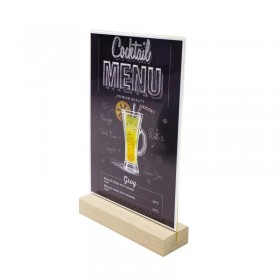
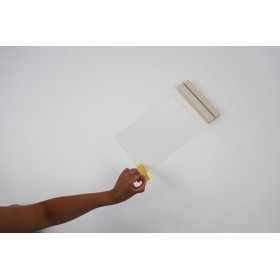
For frequently changing environments (shops, restaurants, agencies with weekly promotions), choose clic-clac frames with opening profiles: poster renewal takes 30 seconds compared to several minutes for a traditional screw frame. This speed frees up valuable time for field teams and promotes truly up-to-date communication.
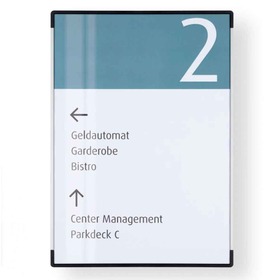
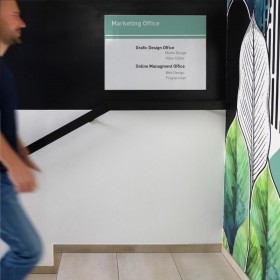
For permanent or semi-permanent displays (signage, stable information panel, room identification), a classic sliding or wall-mounted frame is ideal. Since the speed of change is not critical, we can favor the aesthetic finish and the discretion of the opening system.
For exterior display cases, the essential criterion is waterproofness: systematically choose an IP54 or higher model with seals and key locking. An interior frame installed outdoors degrades in a few months and loses any protective function for the poster. The price difference with an outdoor model is largely justified by the additional lifespan.
For premium and prestige environments (high-end hotels, gourmet restaurants, performance halls), consider stretched fabric frames or LED light frames which provide an enhancing visual touch. For prestigious welcome signage, complete your system with an interchangeable door plate in a matching finish and a wall-mounted clic-clac frame for event communications.
Finally, for multi-site deployments (commercial chains, hotel parks, agency networks), it is essential to harmonize the framework model on all sites for a coherent image. This uniformity also simplifies the management of posters printed in series for the entire fleet, thus optimizing the overall cost of the visual communication system.