Choose the fixing system adapted to your signage and your support
The choice of the fixing system depends on three complementary criteria: the type of nameplate to be fixed (material, weight, format), the host wall support (material, surface finish), and the desired aesthetic effect (visible vs. hidden screws, decorative spacers vs. invisible fixing). A good match between these three criteria guarantees a clean and durable installation.
For light office plates (plexi 3-5 mm, A4 and smaller), professional double-sided adhesives or magnets are often sufficient. The advantage: no drilling in the wall, installation and removal without trace, ideal for tenants and environments with modular furniture. The load capacity is 1 to 3 kg depending on the adhesive models.
For standard nameplates (5-10 mm, A4 to A2 format), the decorative chrome-plated aluminum spacers provide a very enhancing contemporary visual effect: the plate stands out from the wall by 1 to 3 cm, creating a perception of superior quality. The fixing remains discreet (4 spacers at the corners), sufficiently solid for plates weighing 2-5 kg, aesthetically perfect.
For large format or heavy plates (A1 and above, more than 5 kg), systematically provide 4 to 6 fixing points with reinforced dowels suitable for the wall support. Never skimp on the number of fixings for large plates: a falling plate can injure someone and damage the floor. The hidden screws matching the finish of the plate elegantly hide the screws.
For interchangeable installations (door signage for flexible offices, removable service plates), signage fixing magnets are the ideal solution: the plate is attached and removed in a few seconds without any tools. The wall support is only drilled once to install the magnetic countertop. This modularity considerably simplifies the management of a scalable office park.
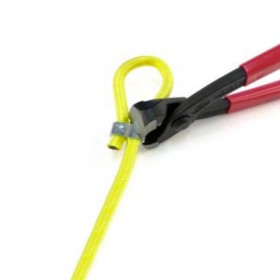
Finally, for quick fixings in an event environment (temporary signage, hanging of orientation signs, fixing tarpaulins on existing structures), the elastic bungee cords provide immediate fixing without drilling or tools. Particularly useful in contexts where no permanent intervention is authorized.