Statut en temps réel de votre commande et de votre livraison.
The advertising totem is the most widely used vertical display solution for marking out a retail space, guiding visitors at a trade show, or reinforcing the visual identity of a corporate reception. Standing roughly 1.80 m to 2.30 m tall with a narrow footprint, it slots into an aisle, against a wall, or at the centre of a stand without ever blocking the flow of visitors. The totem display stand stands out for its ability to carry a large-format printed graphic, visible from a distance, while staying easy to transport and quick to reassemble. It suits companies that exhibit regularly at trade shows, retailers wanting to flag an in-store offer, and event organisers who need temporary signage that goes up in minutes. Unlike a roll-up banner, the standard totem keeps a rigid frame that holds the graphic perfectly taut at all times.
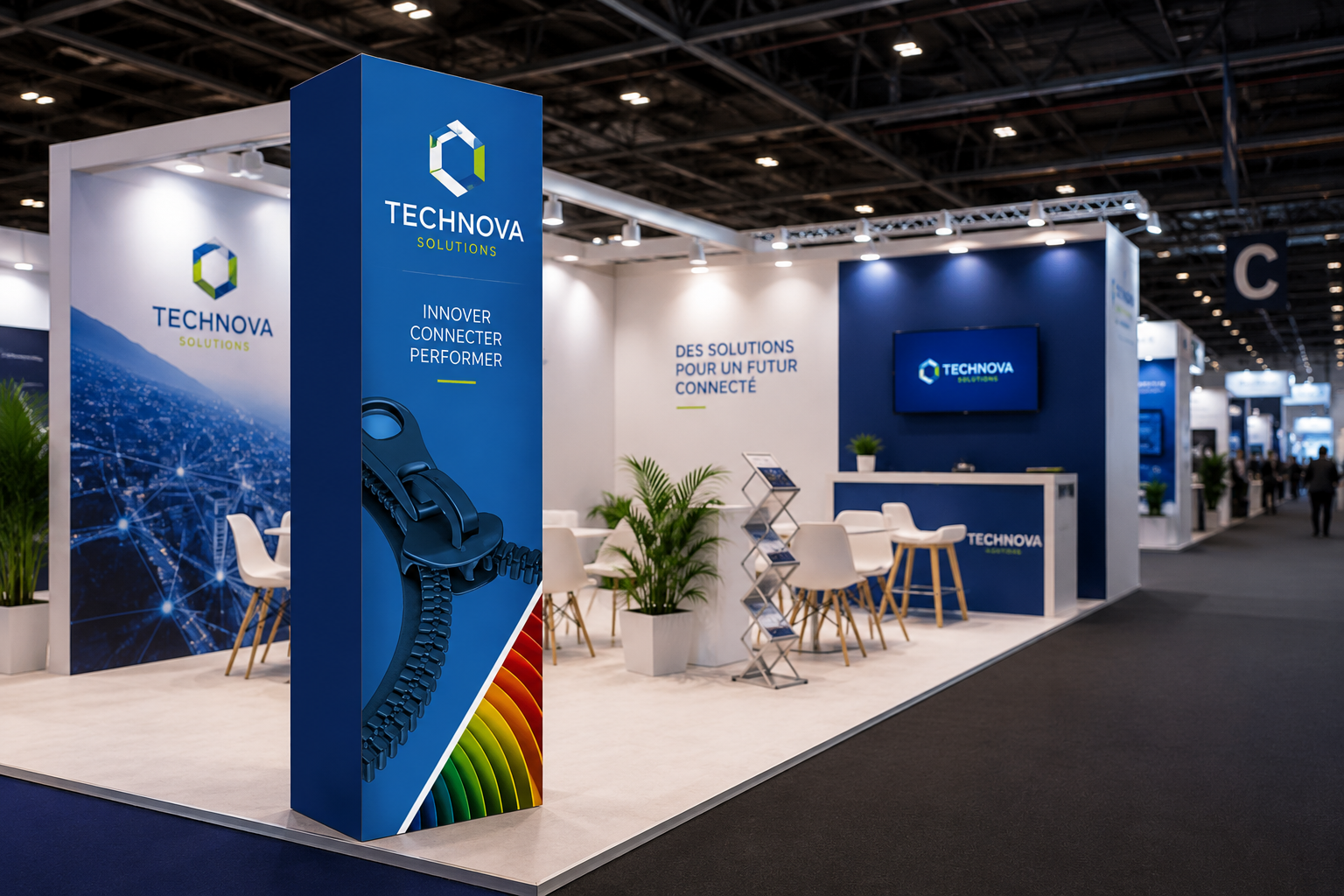
At a trade show, the advertising totem marks a stand from the entrance of the aisle and works alongside a back wall or reception counter. In a shop, it announces a promotion or a new collection right at the entrance. In a corporate lobby, it acts as a permanent visual landmark that helps visitors find their way. This versatility is why the standard totem remains one of the most frequently ordered supports for event communication.
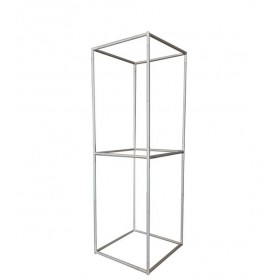
The classic indoor totem display is built on a lightweight aluminium frame dressed with a printed graphic, resting on a stable base that holds firm even in busy walkways. The fabric totem offers a more refined alternative: the tensioned fabric gives a glare-free, premium finish that suits brands wanting a polished image. The round-profile PILLAR format stands apart with graphics visible at 360°, a real advantage for a totem placed in the middle of an aisle or an open space. Each structure answers a specific use case, from a one-off trade show appearance to a semi-permanent in-store installation.
The advertising totem can be fully branded with the company's colours and message, and high-definition printing keeps it legible even from a distance. Covers or banners can be swapped out easily to refresh the message with each campaign, without buying a whole new structure. This flexibility means the same totem can serve several events, with only the graphic changing between them.
Built to travel from one show to the next, the standard totem folds down into a carry bag or transport case and goes back up tool-free in a few minutes. A weighted base or telescopic pole gives it enough stability to withstand repeated foot traffic and draughts inside an exhibition hall. This ease of assembly means sales teams can set it up themselves, with no outside help needed.
The choice comes down to three main criteria: how often it will be used (a premium fabric totem for regular outings, an aluminium frame for occasional needs), the space available (a narrow format for an aisle, a PILLAR totem for 360° visibility), and how the message needs to be shown (single-sided against a wall, double-sided at the centre of a stand). A fabric totem suits a brand exhibiting several times a year, while a classic indoor totem display remains a sound, practical choice for a single event.
On trade show stand, the standard totem signals your brand from the aisle. Combine with a stand background.
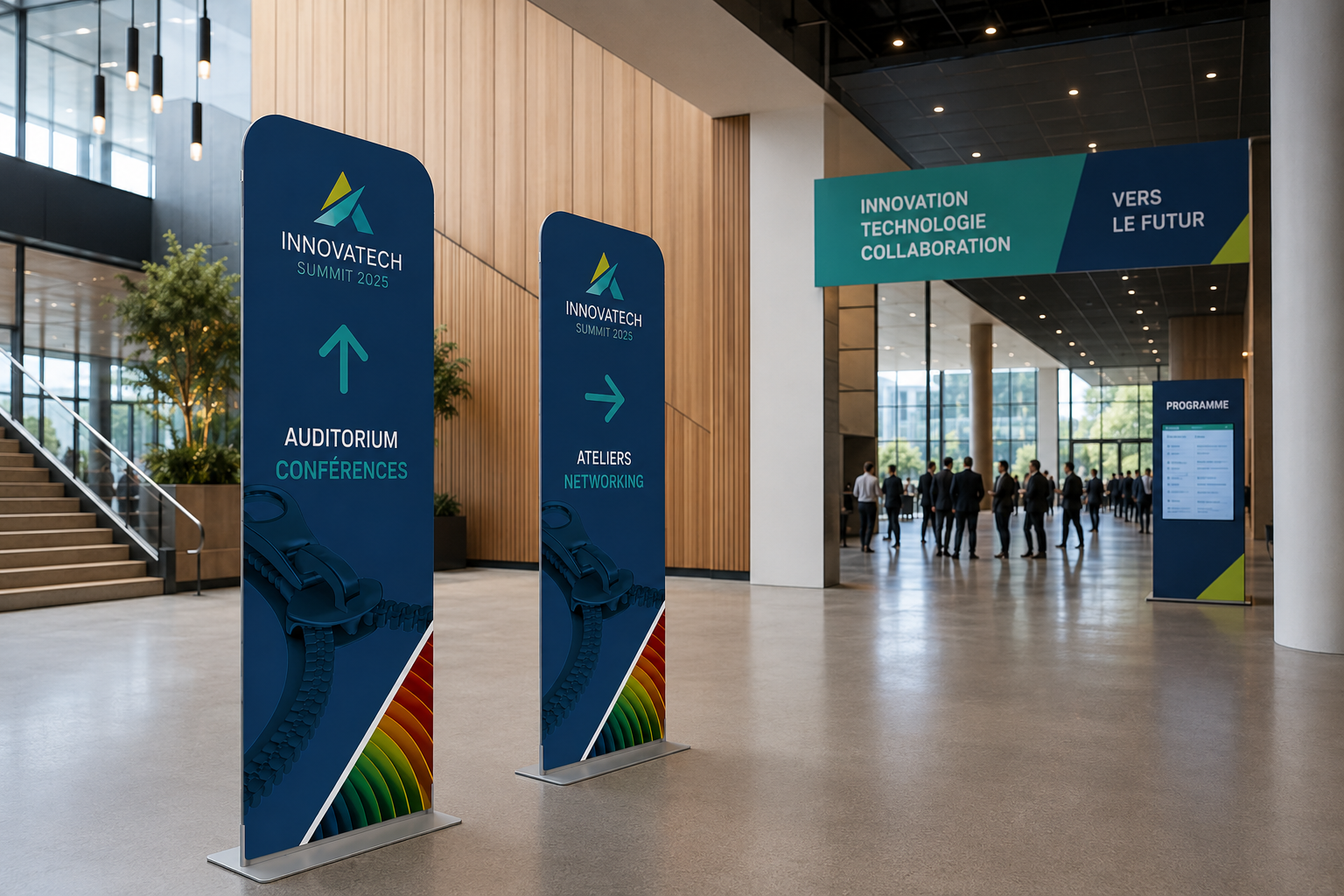
In the event halls, several totems structure the space and identify the areas.
The choice depends on the use and frequency of installation. The standard advertising totem is based on a rigid aluminum structure or a self-supporting PVC panel, with a fixed height of approximately 200 cm and a stable weighted base: ideal for permanent display in a hall, reception or showroom. The rollup, for its part, focuses on a rollable visual and assembly in 30 seconds for mobile salespeople. Opt for the totem when you want sturdiness, double-sided printing and a durable presence rather than maximum portability.
The price of a customized standard totem depends on the structure chosen and the format. A single-sided self-supporting PVC panel model remains economical, while a totem with an aluminum structure with double-sided HD printing and a weighted base is in a higher range. The format has a direct influence: a 200 cm height totem costs more than a reduced format. Include customization to your graphic charter in the quote. Overall, this support remains more imposing than a rollup while remaining significantly more economical than an LED light totem, for an excellent visibility-price ratio.
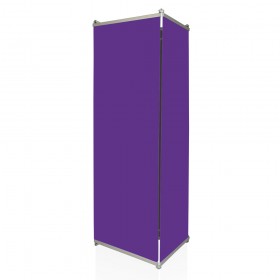
The standard totem can be completely personalized by HD digital printing over the entire visible surface. You provide your vector or high-resolution file and we faithfully reproduce the logo, Pantone colors, slogans and product visuals on the PVC panel or aluminum cladding. personalization covers a tailor-made format, the choice of single or double sided and portrait orientation. The borderless rendering exploits the full height of 200 cm. Ideal for advertising use on a stand or as directional signage in reception, each totem reflects your graphic charter.
Yes, the standard totem exists in a single or double-sided version depending on its location. The double sided is ideal when the totem is placed on an island, in the center of a hall, a trade fair stand or a busy aisle: it remains readable on both sides and doubles the advertising impact without taking up additional space. The aluminum structure or PVC panel then receives two independent HD prints, which allows for example an advertising visual on one side and directional wayfinding signage on the other. In the wall-mounted version, the single side is sufficient and remains more economical.
The lifespan of a standard totem pole depends on the material and the context of use. In permanent indoor use (reception, showroom, hall), a totem with an aluminum structure or rigid PVC panel retains its appearance for several years without notable deformation or yellowing. The weighted base guarantees stability during handling on the stand. HD printing holds up well to indoor light; for outdoor or semi-sheltered use, choose an anti-UV treated print. The visual often remains replaceable depending on the model, you extend the life of the structure while updating your message at a lower cost.
Can't find the answer to your question ?
Investing in an advertising totem is justified as soon as visual communication becomes recurring: a company which participates in several trade fairs per year, a business which regularly changes its product presentation, or a company which receives the public on a continuous basis. For occasional use, a standard aluminum totem is more than sufficient and represents the most rational option; for intensive use, it is better to choose a more robust structure such as the fabric totem, whose taut finish resists repeated handling better and maintains an impeccable finish over time. The effectiveness of a totem is measured less by its presence than by the real impact it produces: a well-positioned totem catches the eye of visitors before they even reach the stand, which makes it an effective support for directing traffic towards a point of sale or an exhibition area. At a trade show, the first seconds of attention are often played out even before arriving at the stand, which makes this first visual cue decisive in the visitor's journey.
A company exhibiting occasionally will favor a classic indoor POS totem, simple to assemble and easy to store between two events. A brand that communicates continuously across several points of sale will benefit from equipping itself with a fabric totem, which is visually more qualitative and more resistant to daily use. For an open space where the totem must remain visible from all angles, such as a reception hall or a central aisle of a trade show, the PILLAR format remains the most relevant thanks to its continuous 360° visual.
The location largely determines the effectiveness of the totem: positioned at the entrance to an aisle or in the main axis of circulation, it captures much wider traffic than at the back of the stand. In store, it works better near the window or in the immediate vicinity of the department concerned by the message, rather than isolated in a corner with little traffic. At a show, it is better to avoid positioning two totems too close to each other so as not to dilute the visual attention of visitors.
A totem correctly stored in its cover or carrying case between two uses keeps its structure intact over several years. The printed visual, on the other hand, wears out more quickly depending on the frequency of handling and exposure to light: it is common to renew it after one or two seasons of intensive communication, without having to change the structure. Cleaning the fabric or tarpaulin with a slightly damp cloth is enough to preserve the color rendering.
The first mistake is to undersize the totem in relation to the height of the stand or the ceiling of the exhibition hall, which greatly reduces its visibility from the aisle. The second is to neglect the stability of the base: a poorly weighted totem in a place of heavy traffic risks tipping over. Finally, many companies order a single visual without providing a replacement cover, while being able to change the message from one event to another is precisely one of the main advantages of the advertising totem compared to fixed signage.
Active filters: