0
0 Cart (empty)
Office & Corporate

Indoor Signage for Offices and Corporate Environments

In corporate environments, interior signage structures visitor orientation from reception to individual offices and supports the daily circulation of staff. Office door name plates, floor directory panels, meeting room signs, and wayfinding for shared facilities (cafeteria, restrooms, utility rooms).

For flexible offices and modern shared workspaces, opt for interchangeable door signs that allow quick updates during reorganisations. Complete your setup with snap frame wall displays for internal communications and a brochure holder at reception for document distribution.

Public Institutions & ERP

Signage for Hospitals, Schools, Town Halls & Public Buildings

For establishments open to the public (hospitals, schools, town halls, shopping centres), interior signage must combine wayfinding functionality with strict regulatory compliance. Entrance orientation maps, floor-level signage, department identification, comprehensive fire safety signage, and PRM accessibility signage: every element plays an essential role in operational flow and user safety.

For hospitals and healthcare facilities specifically, signage made from cleanable materials resistant to disinfectant products is mandatory. For regulatory safety signage (emergency exits, evacuation plans, accessibility), our references comply with all applicable European standards.

Questions fréquentes

What are the legal requirements for indoor signage in a public building (ERP)?

Buildings open to the public are subject to several regulatory requirements: safety signage (exits, fire extinguishers, alarms in accordance with NF X 08-003 standards and the decree of 4 November 1993), disability accessibility signage (Act of 11 February 2005), and maximum occupancy capacity displayed at the entrance. For category 5 and above public buildings, specific fire safety signage is required (NF S 60-303). Stand-Direct supplies compliant display solutions and can provide the necessary certificates for your audits.

Plexiglass, aluminium or wood: which material should you choose?

The choice depends on your visual identity and prestige level. Engraved plexiglass: modern, premium, suited to design-led and corporate environments. Powder-coated aluminium: robust and versatile, ideal for high-traffic settings (public offices, schools, hospitals). Lacquered hardwood: traditional, warm, perfect for boutique hotels, professional practices and upscale restaurants. Always prioritise consistency with your existing décor and branding guidelines.

What size of nameplate to identify an office?

For standard identification of an individual office, A5 landscape (21 x 14.8 cm) or A6 (10.5 x 14.8 cm) is generally optimal: readable at 2–3 metres, discreet enough not to overwhelm the door. For meeting rooms, move up to A4 landscape to include multiple pieces of information (room name, capacity, available facilities). For department identification on corridor walls, A3 or A2 format ensures readability at 5–8 metres.

Should you opt for interchangeable signage?

Yes, for flexible environments (hot-desking offices, shared spaces, departments with variable headcount). Interchangeable sign holders allow name or function changes in seconds without dismantling, which considerably simplifies administrative management and avoids repeat orders with every change. For permanent identification (company name, long-standing departments), traditional engraved signage remains more cost-effective and visually impactful.

What is the recommended installation height for door signs?

The standard installation height for door signs is between 1.50 and 1.60 metres from the floor, positioned above the door handle and at eye level for a standing adult. This height ensures optimal visibility without requiring anyone to look up or down. For establishments welcoming wheelchair users, plan for an installation height of 1.30 metres to ensure visibility for people with reduced mobility (accessibility compliance). For service identification signs mounted on walls perpendicular to doors, a height of 2 metres is recommended for long-distance visibility in corridors.
How do you achieve consistent signage across a multi-site estate?

Multi-site signage consistency starts with defining a precise signage charter: materials, finishes, Pantone colours, typography, pictograms, and standard formats. This charter serves as the reference for all future orders, ensuring perfect coherence even during phased partial renewals. Stand-Direct supports the creation and production of standardised, replicable kits deployable across your entire estate, optimising both visual consistency and overall cost for chains and franchise networks.

How long does professional interior signage last?

Lifespan depends on the material and environment. Powder-coated aluminium plaques (interior): 15–20 years. Engraved acrylic plaques: 10–15 years. Laminated adhesive vinyl: 5–8 years indoors (with slight fading thereafter). Lacquered solid wood plaques: 10–15 years. The main wear factors are impacts (high-traffic areas) and unsuitable cleaning products. With proper maintenance, your signage investment pays for itself over a minimum of 10–15 years.

Can QR codes be integrated into interior signage?

Yes, QR code integration on interior signage is increasingly common. It bridges physical information with digital content: interactive building maps, detailed service descriptions, care request forms, or presentation videos. The QR code is printed in high definition directly on the panel or added as a laminated sticker. To ensure reliable smartphone scanning, plan for a minimum size of 2 x 2 cm for a reading distance of 30 cm.

What is the lead time for a complete interior signage order?

For a complete facility signage package (wayfinding signage, office identification, service plaques, regulatory signage), allow 4 to 8 weeks: 1–2 weeks for design and graphic proof approval, 3–5 weeks for production and customisation, 1 week for delivery. For bulk orders (chains, franchises), our sales team establishes a dedicated optimised logistics schedule. Standard stock references are delivered within 2–4 business days.

Can't find the answer to your question ?

Designing an effective and consistent indoor signage system

The design of a professional indoor signage system calls for a structured approach rather than a piecemeal accumulation of signs added as needs arise. A few simple principles ensure a result that is functional, aesthetically coherent, and built to last.

First principle: audit the user journey. Visualise the path a visitor takes from the entrance to their final destination (office, meeting room, department). At every decision point (corridor, lift, junction), directional signage must clearly indicate where to go. Map all these points on a floor plan before ordering your signage.

Second principle: define a precise signage charter. Choose your materials (acrylic, aluminium, wood), finishes (chrome, matt, brushed), Pantone colours, typefaces, and standard formats. This charter will serve as the reference for all future orders, guaranteeing perfect visual consistency across the entire installation even during phased replacements over time.

Third principle: incorporate mandatory regulatory requirements. Safety signage (emergency exits, fire extinguishers, mandatory PPE), accessibility signage for people with reduced mobility, and statutory identification plates: all of these required signs must be integrated from the outset of the overall design to ensure a cohesive result.

Fourth principle: prioritise modularity for future changes. Your needs will evolve (headcount growth, reorganisation, change of departments). Favour interchangeable solutions such as interchangeable door signs that allow quick updates without dismantling. For regularly changing displayed communications, complement your setup with snap frames with opening profiles.

Fifth principle: invest in lasting quality. Quality signage lasts 10 to 20 years without significant replacement. The initial price difference between budget materials and professional-grade products more than pays for itself over that period. For multi-site rollouts (chains, franchises, agency networks), standardised production ensures consistency and cost optimisation across the entire estate.

There are 20 products.

Sort by:
Acheter un cadre extérieur à prix direct-usine! Cadre clic-clac étanche, à clapets

Weatherproof Snap Frame

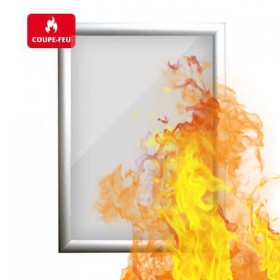
Weatherproof snap frame with anti-glare APET sheet, available in A0, A1, A2, A3, A4, B1 and B2 sizes – portrait or landscape orientation.
€21.66
Hand Sanitiser Gel Dispenser

Hand Sanitiser Gel Dispenser

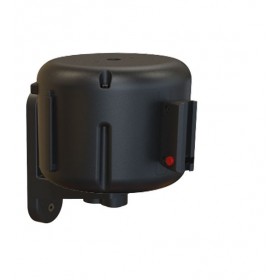
Wall-mounted hand sanitiser gel dispenser — fits on a wall, cabinet or freestanding support. Ready to install in under 1 minute.
€40.00
Hygiaphone finition bois Hygiaphone finition bois

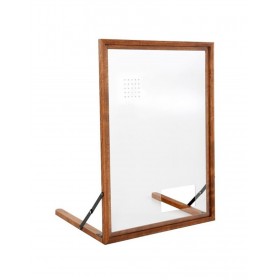
Wooden Sneeze Guard

Wooden sneeze guard with beech wood finish and acrylic plexiglass divider — no assembly required.
€99.00

Meilleures ventes

Toutes les meilleures ventes ›