When should wall markings be preferred over ground posts?
The choice between strap wall markings and conventional ground posts depends on several concrete criteria: available ground space, frequency of closing/opening of access, aesthetic constraints of the environment, available budget.
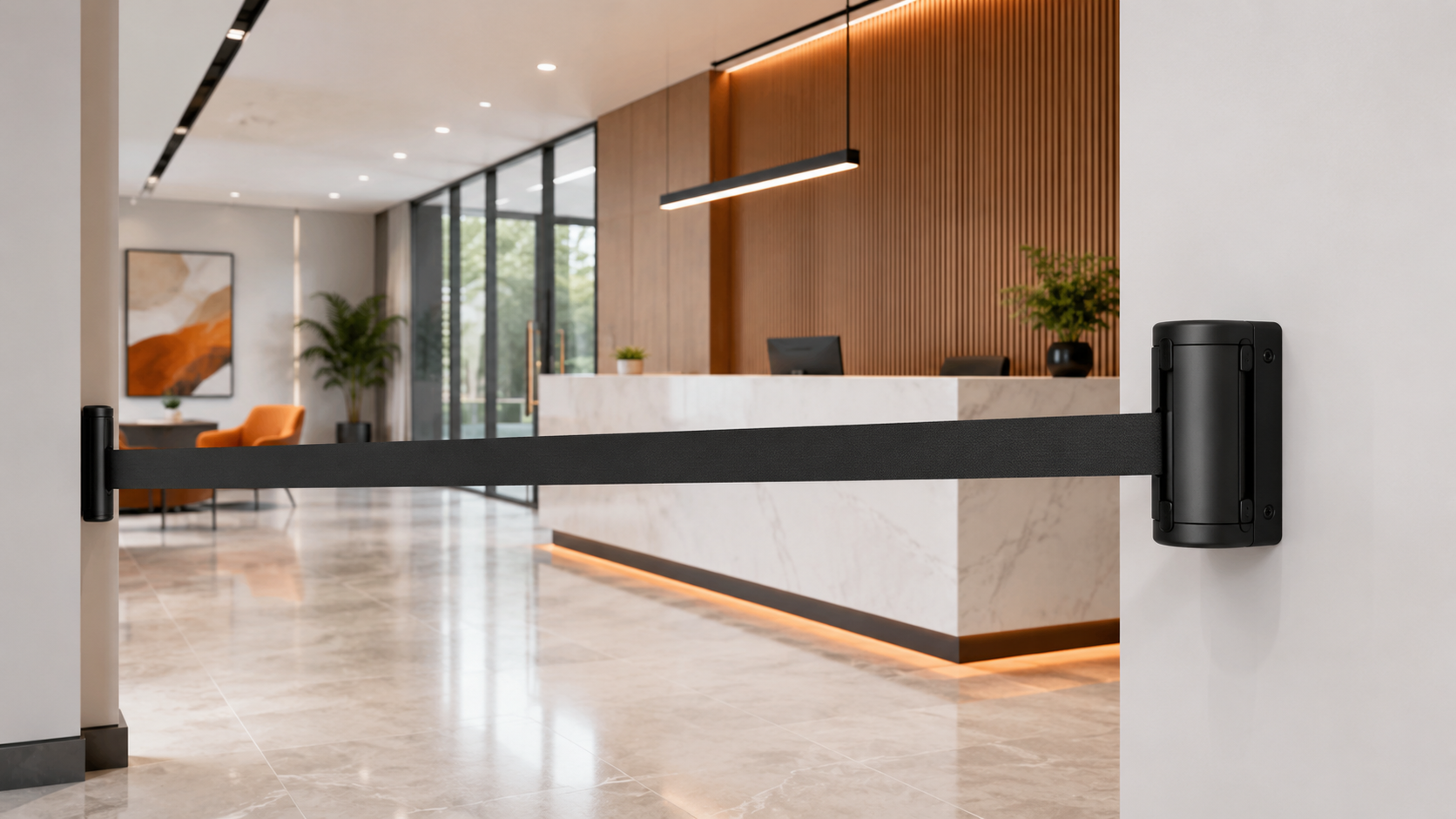
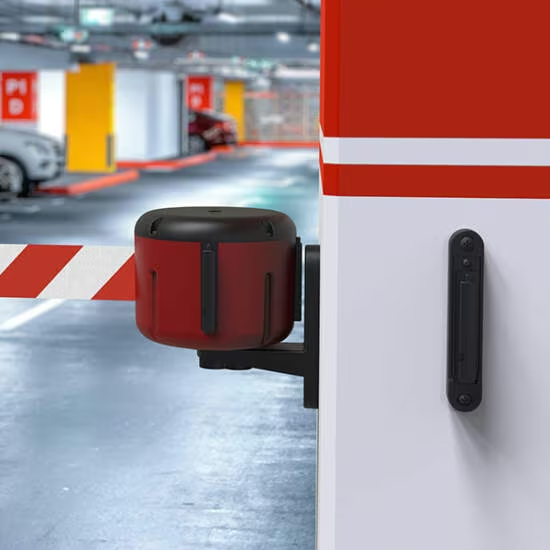
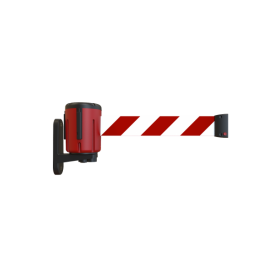
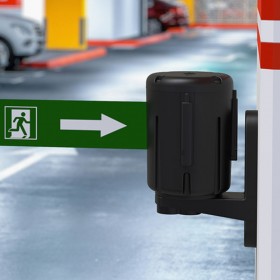
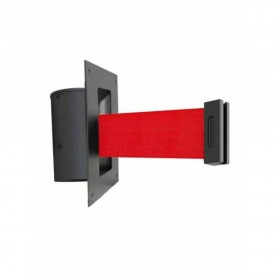
Choose wall marking in the following cases: narrow corridors where posts on the ground would obstruct pedestrian traffic, secondary accesses closed only at certain times (reception closed in the evening, meeting room open only to participants), contemporary design environments where the absence of clutter on the ground enhances the refined aesthetic, modern office reception areas wanting to avoid the "queue" aspect of traditional strap posts.
Conversely, favor ground posts in the following cases: management of busy queues (commerce, banking, administration), no wall mounting possible (tenants, listed historic monuments), need for mobility of the device (modular configurations depending on events), large open spaces where wall closure is not relevant.
For mixed configurations, wall markings can intelligently complement posts on the ground: example of a tertiary reception with strapped posts on the ground to structure the line in front of the counter + wall markings to close secondary access to the office area. This complementarity optimizes both operational efficiency and overall aesthetics.
For corporate reception installations, it is essential to harmonize the finishes of the wall markings with those of your reception signage and any posts: same color of strap, same finish of the wall box (chrome, black, gold according to your charter). This visual coherence considerably reinforces the professional perception of the place.
Finally, for multi-site deployments (agency chains, corporate office parks), harmonize the wall markings across all establishments for a consistent image. For temporary additional fixings (information panels, tarpaulins), our elastic bungee cords effectively complete the system.