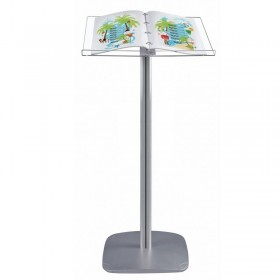
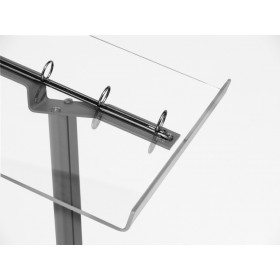
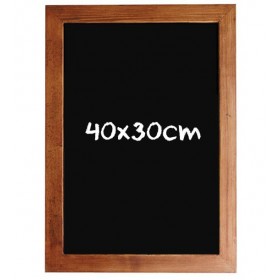
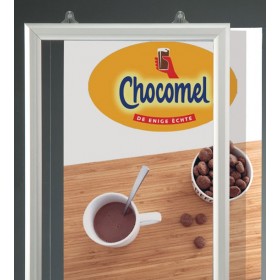
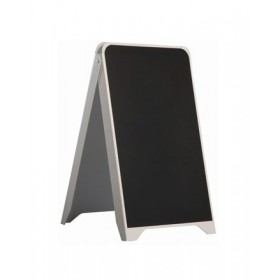
Investing in indoor POS displays becomes worthwhile as soon as a retail space wants to lift its conversion rate without a full redesign: an illuminated frame in the window, a well-placed stand on the shop floor or a totem at the entrance is often enough to redirect customer attention towards a specific offer. The real question isn't just which support to choose, but at what point in the customer journey it should appear, and how often the graphic needs refreshing. A retailer changing promotions every month has different needs from a company installing reception signage meant to last several years: the former will look for structures where only the graphic is easy to swap, the latter will invest in higher-quality materials and a more durable finish.
Buying Direct from the Manufacturer: What's the Benefit for a Retail Network?
For a multi-site network, working with a manufacturer direct rather than through a reseller generally makes it easier to keep visual consistency across shops, since every support is produced to the same technical specification from one site to the next. This approach also simplifies managing recurring orders, a key point when dozens of locations need to receive the same signage on a coordinated schedule. Centralising orders also avoids the quality or colour differences that can creep in when each shop orders separately from different suppliers.
Coordinating a POS Rollout Across Multiple Sites
Multi-site logistics is often the most underestimated part of rolling out indoor POS displays. It's best to centralise ordering through a single point of contact who manages distribution to each address, rather than placing separate orders per shop, which makes tracking harder and increases the risk of items going to the wrong location. Building in enough lead time between signing off the graphics and the launch date of the promotion is essential, especially when several different supports need to arrive at each site together.
Which Support for Which Business Goal?
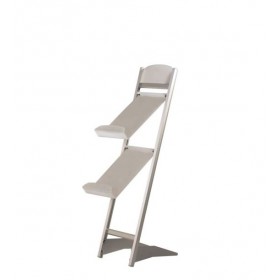
To catch attention from a distance, tall formats such as totems or illuminated frames remain the most effective, as they're visible right from the shop entrance or from the aisle of a trade show. To inform on a specific product at the moment of decision, stands and brochure holders placed directly on the shop floor perform better, since they're right where the purchase happens. Small countertop formats, such as table flags, suit short-term announcements or brief promotions, whereas a fixed wall frame is better justified for permanent signage.
Managing Cost of Ownership Over Time
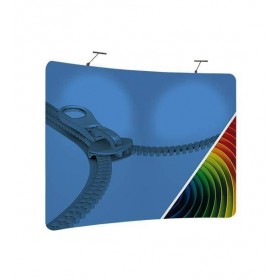
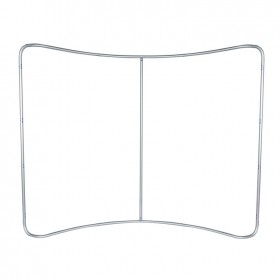
The real cost of ownership of indoor POS displays isn't limited to the initial purchase: it needs to factor in how often graphics are refreshed, how well the material stands up to repeated handling, and how easily a damaged part can be replaced without buying a whole new structure. Modular structures, where only the cover or poster changes, noticeably cut this cost of ownership compared with single-piece printed displays that need replacing in full with every campaign.
Common Mistakes to Avoid
The first mistake is choosing a standard support without accounting for the actual size of the retail space, which either clutters a small area or looks too discreet in a large store. The second is overlooking how the different supports within one location work together, when they should form a coherent set rather than a scatter of mismatched elements. Finally, for a multi-site rollout, underestimating the coordination time needed between ordering, customisation and delivery to each address remains one of the most common causes of delay at launch.